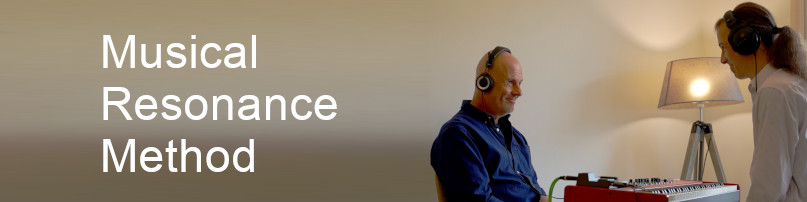
The Musical Resonance Method (MRM) uses music as a medium of relationship. A responsive interaction between musician and listener is shaped by empathic improvised music.
We have become remarkably good at optimisation: We measure, improve, accelerate and redefine limits - often with good reason. But human beings are not problems to be optimised. Instead of pushing harder, or doing more of the same, some situations call for something different: attention, relationship, presence, responsiveness and empathy.
What people experience
"This was a message that I had to receive ... like an inner calling arriving at exactly the right time in my life. After the session the vision continued to return - helping me navigate situations more clearly and moving in the right direction."
Teddy, impact entrepreneur and artist
"I had a vision like raindrops falling from branches after the rain has stopped. And this was a sound the piano was making for me. (...) when he was using the black keys a lot (...) it reminded me of a song from my childhood, a japanese song called Sakura."
Barbara Davis, artist and art teacher
The Musical Resonance Method
Based on years of observations and feedback from participants, I began researching the various processes and layers my piano sessions seemed to touch.
I found much applicable research around relationships and music therapy, which resulted in the following:
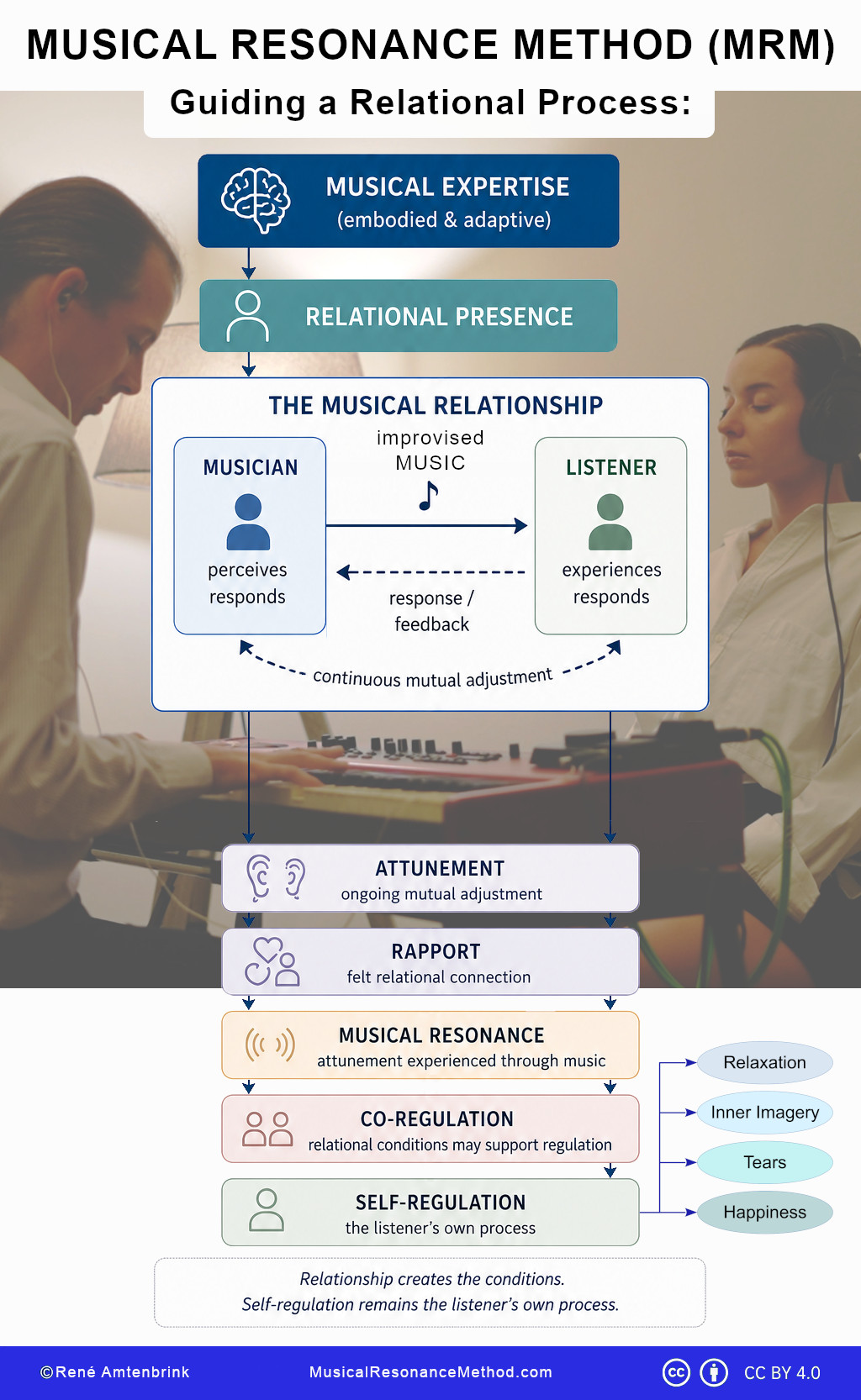
Besides providing perspective on all the layers shown in the visual summary above, the paper describes also how the MRM framework developed:
"The Musical Resonance Method (MRM):
A Conceptual Framework for Responsive Musical Interaction"
[Read on Zenodo] · [Download PDF]
Wider Context
The relationship between arts, health and wellbeing is increasingly being explored across healthcare, social care and community settings. The World Health Organization has highlighted the growing evidence base around the role of the arts in health and wellbeing and the importance of collaboration across sectors.
To get an introduction what an MRM Session can be like, I offer open group sessions, where I play piano for everybody at once. Make yourself comfortable at home, grab some good headphones and relax, maybe with eyes closed during the session. Donation based, no registration needed.
Thursday 1st Oct 2026, 18.00 german/swedish time, Cyprus: 19.00.
I will put up a zoom-link here shortly before the session.
Donation-based, for example € 10-50 afterwards via PayPal. If you do not use PayPal, text me so I can send you my bank-details. It may depend and vary a lot on your country and income what you consider suitable here, so I leave it up to you for now.
Making MRM happen
I am interested in working with people and organisations that can bring MRM into settings where it may be meaningful for others.
Depending on context, MRM can be understood as music therapy, yet it is not meant to treat any clinical grade conditions. Where suitable, MRM may complement a treatment, for example to help the client relax and support reflecting, but it cannot supplement indicated treatmeant.
Examples of settings:
Healthcare
Hospitals, clinics, health programmes and complementary services.
Mental health
As a complementary relational approach alongside existing professional care.
Social care
Programmes supporting people experiencing stress, isolation or challenging life circumstances.
Culture & community
Municipal, cultural and community-based programmes where music can create opportunities for connection and participation.
Examples of collaboration forms:
Pilot projects
Explore MRM with a specific population, organisation or setting.
Existing programmes
Integrate responsive musical interaction into an existing health, social-care or cultural programme.
Research & evaluation
Develop projects that examine the experience and potential of MRM.
Funding & project development
Develop projects that can be supported through institutional, public or other forms of funding.
I am particularly interested in collaborations where MRM can be explored with a specific group or within an existing programme.
If you have a setting, a population or an idea, I would be interested in exploring what MRM could contribute there.